Running a New York City building is complex. There are countless decisions, unexpected issues, and long-term planning responsibilities that boards take on every year. But there’s also a large portion of building operations that is repeatable and predictable: recurring compliance filings, tax submissions, insurance renewals, inspections, and certifications.
Most buildings face dozens of these requirements annually. Missed deadlines can lead to late filing penalties, violations, missed refunds, or lapses in insurance coverage. And once something slips, it often takes more time and money to fix than it would have to prevent in the first place.
That’s why we built an AI-powered engine to handle recurring building tasks from start to finish. What started as automatic compliance scheduling now extends across compliance, insurance, and tax workflows, all designed to keep buildings ahead of deadlines and eliminate late filings entirely.
How it works
Every requirement mapped automatically
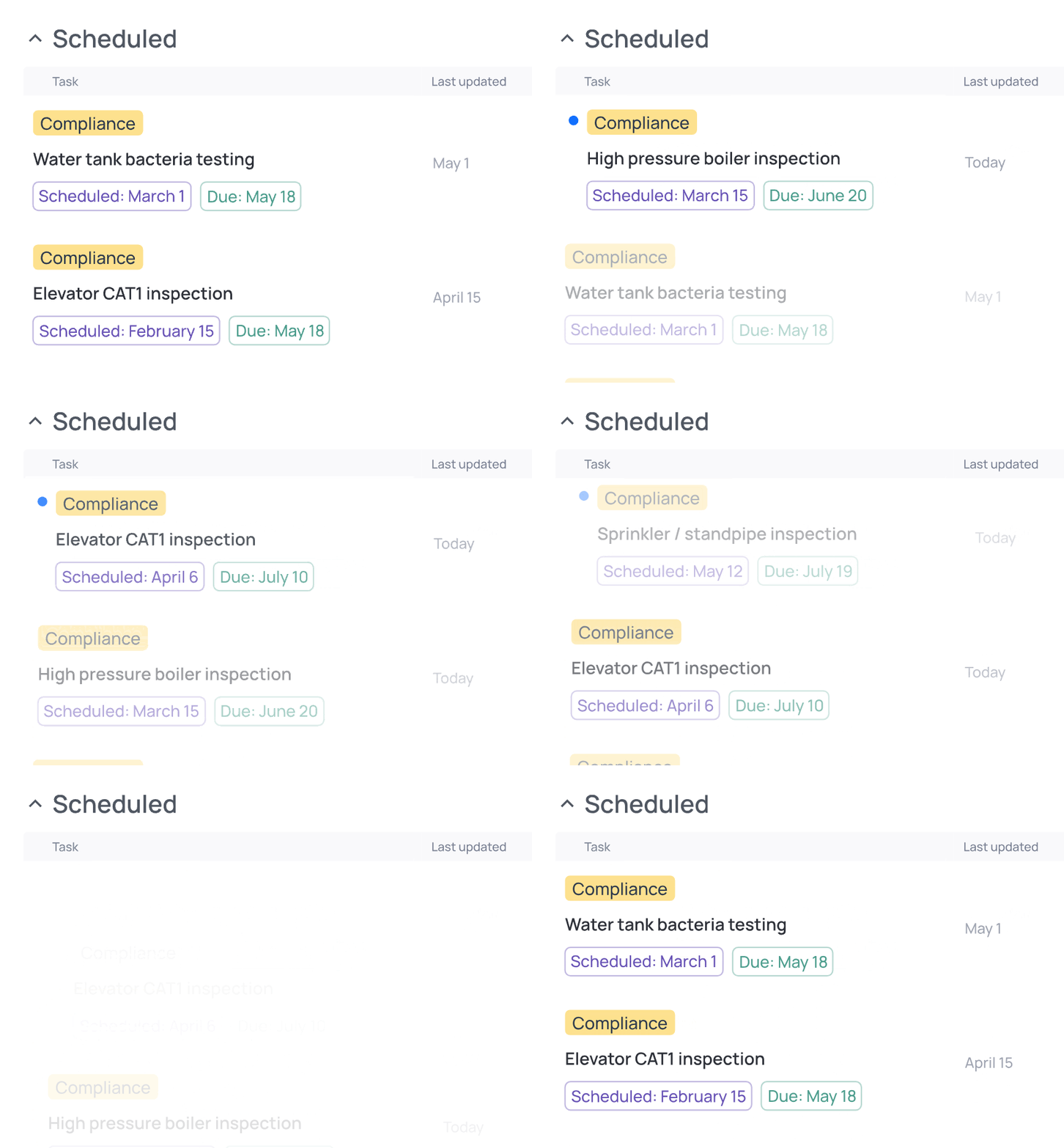
As soon as a building is onboarded, Daisy generates a comprehensive calendar of recurring tasks based on the building’s size, systems, and regulatory obligations. This includes dozens of compliance requirements each year, along with insurance renewals and tax-related deadlines. Everything is mapped upfront, so nothing relies on memory or manual tracking.
Work starts as early as possible
Whenever a task or filing has a defined submission window, Daisy initiates it on the first day that window opens. Starting early reduces risk, prevents late filing penalties, and gives buildings time to address follow-ups without pressure.
Vendor coordination handled automatically
Many recurring tasks require outside vendors, from inspectors and engineers to insurance brokers and service providers. Daisy’s system coordinates outreach, scheduling, and follow-ups automatically, removing the back-and-forth that often causes delays.
Automatic submissions and confirmations
Once inspections are completed or information is gathered, filings are submitted on the building’s behalf. The system tracks confirmations and closes the loop, ensuring tasks are fully completed, not just started.
Full visibility for boards in the Daisy Dashboard
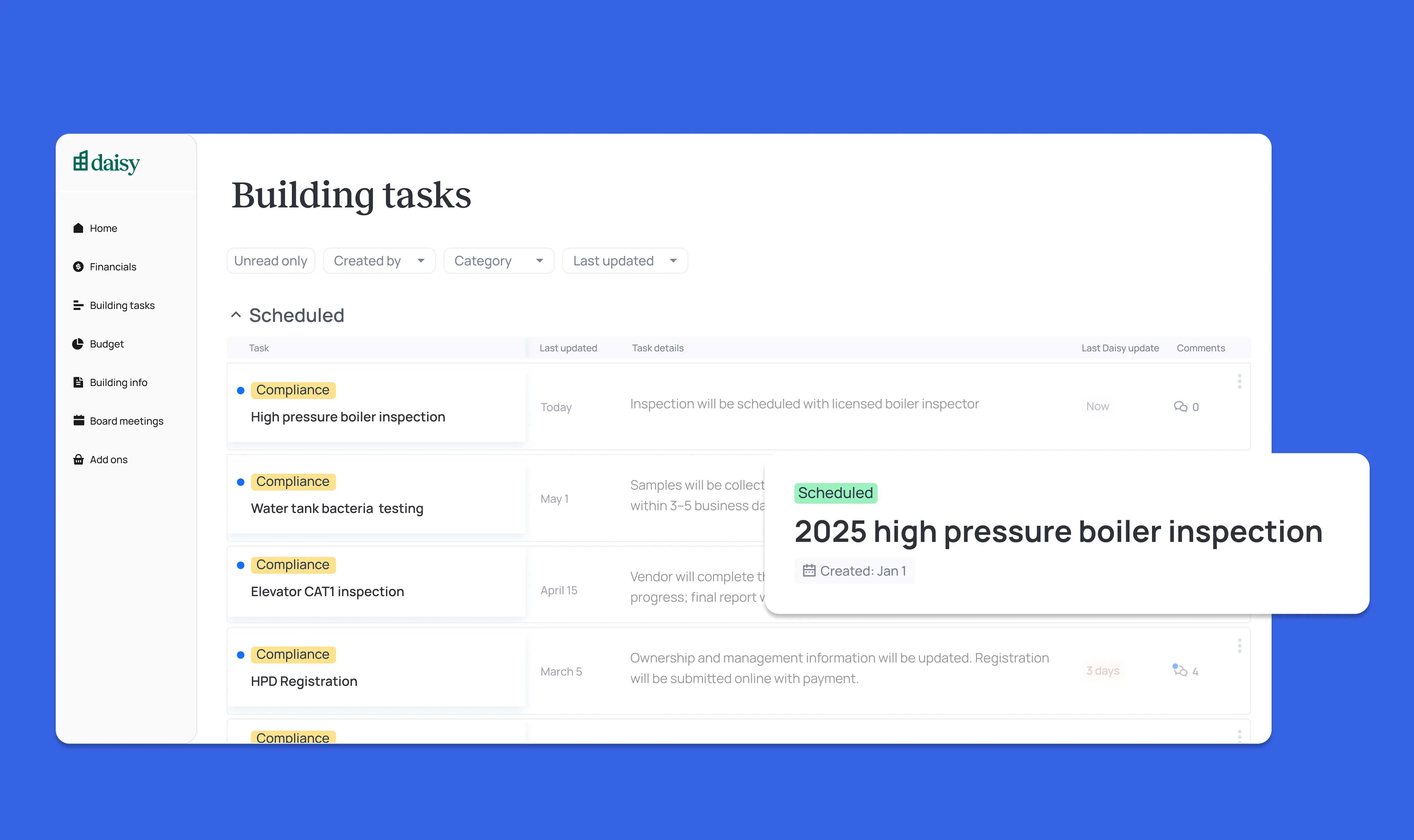
Boards can see the status of every recurring task directly in the Daisy Dashboard. Upcoming deadlines, in-progress work, and completed items all live in one place, so there’s no stressing or surprises.
What this means for your building
Recurring work gets done earlier and more consistently. Compliance filings are submitted on time, insurance coverage stays active, tax deadlines are met, late filing penalties are avoided entirely.
Boards don’t have to monitor timelines or manage follow-ups. The most predictable parts of building operations run quietly in the background, the way they should. That consistency frees up our team to focus on higher-impact work: long-term planning, thoughtful guidance, and supporting the overall health of each building, not just working through a checklist.